Few topics divide the watch community more sharply than polishing. Ask in any watch forum whether you should polish your Rolex, Omega, or TAG Heuer and you will get passionate opinions on both sides. Some owners cannot bear a single scratch. Others treat every mark as a badge of honour and refuse to let a polishing cloth near their watch.
The honest answer — as with most things in horology — lies somewhere in the middle. Whether you should polish your watch depends entirely on the watch, the finish, your intentions for it, and who is doing the work.
At Dynamis Watch Service Piccadilly we polish watches professionally from our workshop inside Piccadilly Circus Underground Station. We also regularly advise clients against polishing when it would reduce the value or authenticity of their timepiece. This guide gives you the information to make the right decision for your watch.
What Watch Polishing Actually Does
Before deciding whether to polish, it helps to understand exactly what the process involves.
Case and Bracelet Finishing
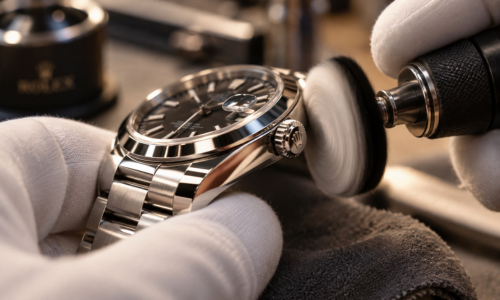
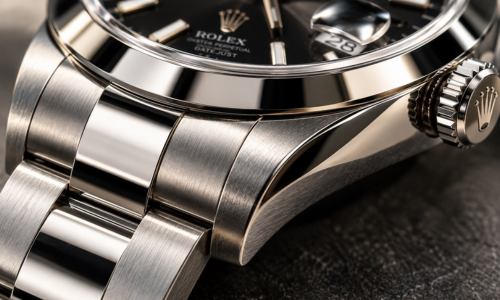
Most luxury watches use a combination of two surface finishes — brushed and polished. Brushed surfaces (also called satin or grain finish) show fine parallel lines created by grinding the metal in one direction. Polished surfaces are mirror-bright, achieved by progressively finer abrasive compounds until the metal reflects like glass.
A full case polish removes a thin layer of metal from the surface. On a brushed surface this means the directional grain is abraded away and replaced with a mirror finish — permanently changing the character of the surface. This cannot be undone.
What Polishing Removes
- Surface scratches and light scuffs
- Oxidation and dullness on polished surfaces
- Minor dings on bracelet links
- The patina that develops naturally with age and wear
What Polishing Cannot Fix
- Deep gouges or impact marks
- Worn lugs from bracelet removal
- Stretched bracelet links
- Case edge sharpness lost through repeated polishing over years
When Polishing Is the Right Decision
There are genuine situations where professional polishing is the correct choice — and where it adds rather than removes value from the watch ownership experience.
Everyday Watches and Fashion Brands
If your watch is an everyday wearer — a fashion brand, a mid-range quartz, or a watch you wear without concern for resale value — polishing is entirely appropriate. Scratches on a watch you wear daily are inevitable, and a professional polish restores the appearance so you can enjoy it more. There is no collector community scrutinising the originality of your Armani Exchange bracelet.
Deeply Scratched Polished Surfaces
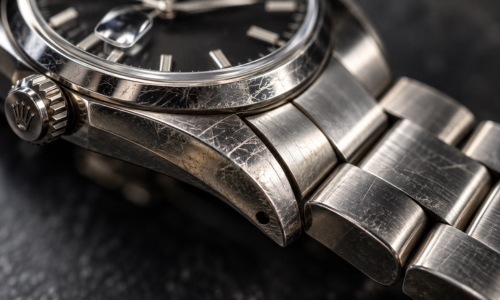
If the polished surfaces of your watch — the case sides, the bezel edges, the bracelet centre links — are deeply scratched to the point where they look neglected rather than worn, a targeted polish of polished surfaces only is a reasonable choice. A skilled watchmaker can polish only the polished areas while preserving the brushed surfaces — this is called selective polishing and requires genuine skill and experience.
Before a Sale — With Caveats
If you are selling a watch to a non-collector buyer — someone who simply wants a nice-looking Rolex for everyday wear rather than a pristine investment piece — a light polish can improve the presentation and achieve a better price. However if your buyer is a collector, a dealer, or anyone who understands the watch market, an over-polished watch will be immediately identified and priced accordingly — often lower than an unpolished example in equivalent condition.
Sentimental Value Over Monetary Value
If the watch holds sentimental value rather than investment value — a gift, an inheritance, a watch you have no intention of selling — polish it if you want to. Wear it, enjoy it, and make it look the way you want it to look. Not every watch needs to be treated as a financial asset.
When Polishing Is the Wrong Decision
Collector-Grade Watches
For watches with genuine collector appeal — vintage Rolex, Omega Speedmaster references, limited editions, discontinued references with strong secondary market demand — polishing reduces value significantly. Collectors prize originality above almost everything else. An unpolished watch with honest wear is almost always worth more to a serious collector than a polished example that has lost its original surface character.
The difference in price between an unpolished and over-polished example of the same Rolex reference on the secondary market can be thousands of pounds. This is not a minor consideration.
Brushed Surfaces
Brushed surfaces — the top of Rolex Submariner lugs, the sides of an Omega Seamaster case, the outer bracelet links of a Datejust — should almost never be polished unless they are being returned to brushed specification by a specialist. Once a brushed surface is polished to a mirror finish, restoring it to the original directional grain requires significant metal removal and specialist equipment. Most high-street polishing jobs simply polish everything to a mirror finish — destroying the original surface architecture of the watch permanently.
Sharp Case Edges
One of the most visible signs of an over-polished watch is the loss of sharp case edges. Luxury watches are designed with precisely defined angles and crisp transitions between surfaces. Each polishing cycle rounds these edges slightly. A watch that has been polished repeatedly over decades has visibly soft, rounded edges that immediately betray its history to any experienced eye.
Vintage Watches
The patina on a vintage watch — the fading of lacquer, the mellowing of indices, the natural wear on case edges — is part of its authenticity and often a significant part of its value. Polishing a vintage watch strips this history and can reduce its value dramatically. Vintage watch buyers and dealers can immediately identify a polished example versus an original-surface piece.
The Rolex Polishing Question
Rolex specifically deserves its own section because it is the most common brand brought to our Piccadilly workshop with polishing questions.
What Rolex Says
Rolex recommends that case and bracelet polishing is carried out by an authorised service centre as part of the full service process. Their service includes restoring all surfaces — brushed and polished — to original specification. This is carried out with professional equipment and the correct finishing tools for each reference.
What the Market Says
The secondary market tells a different story. Unpolished Rolex sports models — particularly Submariners, GMTs, and Daytonas — command a premium over polished examples. A Submariner with original brushed lug tops and honest wear is worth more than an identical reference that has been polished to a mirror finish. Serious Rolex collectors and dealers assess polishing immediately and price accordingly.
Our Recommendation for Rolex Owners
If your Rolex is a sports model and you have any intention of selling it — do not polish it. If your Rolex is a dress watch with polished surfaces that look dull or scratched — a targeted selective polish of polished-only surfaces by a qualified watchmaker is a reasonable option. Never have a Rolex polished by anyone without specific luxury watch polishing experience — the damage done by an inexperienced hand polisher is irreversible.
Professional Polishing vs Home Polishing
What Home Polishing Does
Consumer metal polish products — Autosol, Cape Cod cloths, jeweller’s rouge — can remove light surface marks from polished surfaces. Used carefully on polished-only areas by someone who understands watch finishing, they can produce a reasonable result. Used carelessly across brushed surfaces, case edges, and sapphire crystals, they cause irreversible damage.
What Professional Polishing Does
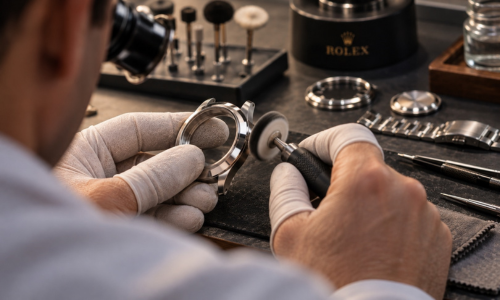
A professional watchmaker with case polishing equipment uses progressively finer abrasive compounds and polishing wheels matched to the specific alloy — steel, gold, titanium — of your watch. Critically, a skilled professional masks and protects brushed surfaces, preserves case edges, and knows when to stop. The result is a watch that looks renewed rather than over-worked.
At Dynamis Watch Service Piccadilly, full case and bracelet polishing starts from £35. Selective polishing — treating polished surfaces only while protecting brushed areas — is quoted individually depending on the watch.
The Verdict — To Polish or Not to Polish
| Situation | Recommendation |
|---|---|
| Everyday fashion or mid-range watch | ✅ Polish — enjoy it |
| Luxury watch — non-collector buyer | ✅ Light selective polish acceptable |
| Luxury watch — collector or dealer buyer | ❌ Do not polish |
| Vintage watch of any brand | ❌ Do not polish |
| Rolex sports model (Sub, GMT, Daytona) | ❌ Do not polish |
| Rolex dress watch with dull polished surfaces | ✅ Selective polish of polished areas only |
| Brushed surfaces on any watch | ❌ Never polish unless returning to brushed spec |
| Sentimental watch not for resale | ✅ Your choice — polish if it makes you happy |
Visit Us for Professional Watch Polishing in London
If you decide professional polishing is the right choice for your watch, Dynamis Watch Service Piccadilly offers case and bracelet polishing from £35 with free assessment before any work begins.
We will always tell you honestly if we think polishing your watch would be the wrong decision — including if we think you should leave it exactly as it is. That honest advice is part of what 30 years of specialist watchmaking looks like.
Dynamis Watch Service Piccadilly
Unit 9, Piccadilly Circus Underground Station
London W1J 9HS
📞 020 3808 0124
Open Monday to Friday, 10am–6pm.
Walk-ins welcome — no appointment needed.
Book a free assessment · Watch polishing service · All services