If you own a Rolex or an Omega — or you are considering buying one — the question of value retention will have crossed your mind. Both brands sit at the pinnacle of Swiss watchmaking. Both have decades of heritage. Both command serious prices on the secondary market. But which one actually holds its value better over time — and what does that mean for you as an owner?
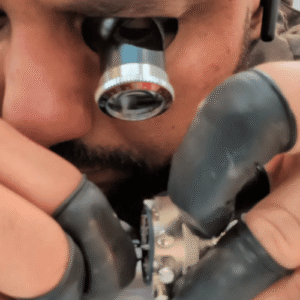
At Dynamis Watch Service Piccadilly we service both Rolex and Omega watches every week from our workshop inside Piccadilly Circus Underground Station. We see first-hand how these watches age, what affects their condition, and what owners do — or fail to do — to protect their investment. This guide gives you an honest, practical answer to one of horology’s most debated questions.
The Short Answer
Rolex holds its value better than Omega — in most cases, on most models, across most time periods. But the full picture is more nuanced than that, and there are specific Omega models that rival or outperform certain Rolex references on the secondary market.
Why Rolex Holds Its Value So Well
Controlled Supply
Rolex produces approximately one million watches per year — a deliberately limited output for a brand of its global prestige. This artificial scarcity keeps demand consistently ahead of supply on popular models like the Submariner, Daytona, and GMT-Master II. When demand exceeds supply, prices hold or increase.
Brand Recognition Beyond the Watch Community
Rolex is one of the most recognised luxury brands in the world — not just among watch enthusiasts but among the general public. This broad recognition creates a deep secondary market of buyers who may never read a watch forum but know exactly what a Rolex Submariner represents. Broad demand equals strong resale prices.
Consistency of Design
Rolex evolves its designs incrementally rather than radically. A 2010 Submariner and a 2024 Submariner are immediately recognisable as the same watch. This consistency means older references do not look dated — protecting their resale appeal for decades.
The Rolex Ecosystem
Authorised dealers, waiting lists, grey market premiums, and the cultural cachet of wearing a Rolex all contribute to a self-reinforcing value ecosystem. When a watch has a waiting list at retail, it is almost guaranteed to hold or increase its value on the secondary market.
Rolex Models With the Strongest Value Retention
| Model | Retail Price (approx.) | Secondary Market Premium |
|---|---|---|
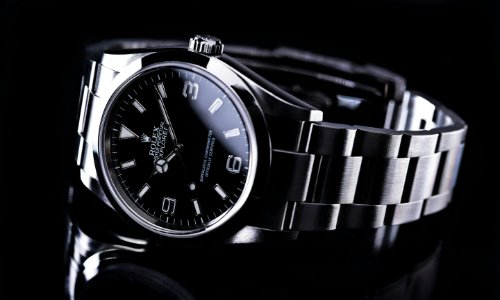
| Daytona (steel) | £13,800 | Often 2–3× retail |
| Submariner Date | £9,550 | Typically 10–30% above retail |
| GMT-Master II (Pepsi) | £10,350 | Often at or above retail |
| Datejust 41 | £7,350 | Typically near or slightly below retail |
| Explorer I | £6,850 | Typically near retail |
The Daytona in stainless steel is widely considered the strongest value-retaining watch in the entire luxury segment — not just Rolex. Waiting lists of several years at authorised dealers drive secondary market prices to extraordinary levels.
Why Omega Is a Different Proposition
Omega produces significantly more watches per year than Rolex — estimates suggest between 600,000 and 800,000 — and operates across a wider price range, from entry-level Seamasters to ultra-high-end Grand Seiko competitors. This broader production base means Omega watches are generally more accessible on the secondary market, which tempers resale premiums.
That said, Omega is far from a poor investment. It is a poor investment relative to certain Rolex references — not relative to the wider watch market or to other asset classes.
The Speedmaster Exception
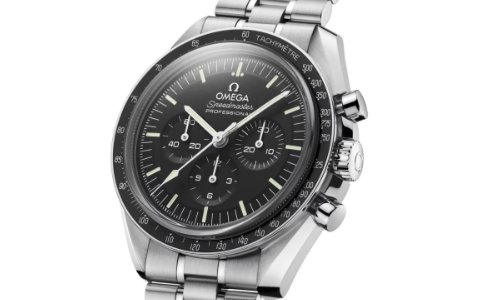
The Omega Speedmaster Professional Moonwatch occupies a unique position. Its connection to the NASA Apollo missions, its unchanged movement since 1968, and its status as a genuine piece of space history give it a cultural weight that few watches outside Rolex can match. The Speedmaster holds its value exceptionally well for an Omega — and in certain vintage references, appreciates significantly.
Seamaster Demand
The James Bond association has given the Seamaster sustained global recognition. The 300M in particular has a loyal following and holds its value reasonably well — though typically below retail on the secondary market rather than at or above it.
Omega Models With the Strongest Value Retention
| Model | Retail Price (approx.) | Secondary Market |
|---|---|---|
| Speedmaster Professional Moonwatch | £5,700 | Typically 80–100% of retail |
| Seamaster 300M | £5,200 | Typically 60–80% of retail |
| Aqua Terra | £4,900 | Typically 55–75% of retail |
| Seamaster Planet Ocean | £6,400 | Typically 65–80% of retail |
| De Ville Tresor | £4,800 | Typically 50–65% of retail |
The Role of Servicing in Value Retention
This is where many watch owners lose value without realising it — and where we see it most clearly at our Piccadilly workshop.
A watch that has not been serviced regularly loses value on the secondary market regardless of brand. Buyers know what a neglected movement looks and feels like. A worn rotor, a stiff crown, a fogged crystal, or erratic timekeeping all signal a watch that has not been cared for — and reduce the price accordingly.
What Regular Servicing Does For Resale Value
- Keeps the movement in specification — accurate timing is a key buyer concern
- Prevents internal corrosion from dried lubricants — invisible damage that is expensive to correct
- Maintains water resistance — a failed seal allows moisture that corrodes the movement from within
- Creates a documented service history — buyers pay a premium for watches with full paperwork
Independent vs Authorised Servicing
For watches outside their manufacturer warranty, independent servicing by a qualified horologist delivers the same technical outcome at 40–60% lower cost. A Rolex Submariner service at the authorised Rolex service centre costs £600–£800. The same service at Dynamis Watch Service Piccadilly starts from £280 — with a 12-month guarantee.
The key is using a watchmaker with documented experience on your specific brand and movement. At Dynamis we service both Rolex and Omega movements as a core specialism from our Piccadilly Circus workshop.
Which Should You Buy for Investment?
If pure value retention is your primary objective — buy a stainless steel Rolex Daytona, Submariner, or GMT-Master II. These are the closest thing the watch world has to a guaranteed store of value.
If you want a luxury watch that you will actually enjoy wearing every day, that tells a genuinely remarkable story, and that will still hold approximately 70–90% of its value over time — buy an Omega Speedmaster Professional or Seamaster 300M.
The honest answer is that neither Rolex nor Omega should be purchased purely as a financial investment. Both are subject to market fluctuations, changing tastes, and the condition risk that comes with a worn mechanical object. But both — when properly maintained — hold their value far better than almost any other wearable luxury product.
Protecting Your Investment — Practical Steps
Whichever brand you own, these steps protect resale value:
- Service every 5–7 years — do not wait until something goes wrong
- Keep all original packaging, papers, and documentation
- Store in a watch box or winder when not wearing — avoid temperature extremes
- Replace the battery on quartz models every 1–2 years — a dead battery left in a watch can leak and corrode the movement
- Address any damage promptly — a cracked crystal left unrepaired allows moisture ingress
- Use a qualified independent watchmaker — not a high-street jeweller without specialist training
Service Your Rolex or Omega at Piccadilly Circus
Dynamis Watch Service has been servicing Rolex and Omega watches as an independent specialist from inside Piccadilly Circus Underground Station since 1994. Over 30 years of experience, 621 Google reviews averaging 4.8 stars, and a 12-month guarantee on every job.
Rolex servicing from £280 · Omega servicing from £200
Free inspection and written quote before any work begins.
Dynamis Watch Service Piccadilly
Unit 9, Piccadilly Circus Underground Station
London W1J 9HS
📞 020 3808 0124
Open Monday to Friday, 10am–6pm.
Walk-ins welcome — no appointment needed.
Book a free assessment · Rolex servicing · Omega servicing
Frequently Asked Questions
Q: Does a Rolex always go up in value?
A: Not always — but popular stainless steel sports models like the Submariner, Daytona, and GMT-Master II have historically held or exceeded retail value on the secondary market. Condition, service history, and completeness of paperwork all affect the final price.
Q: Is Omega a good investment watch?
A: Omega watches typically hold 60–90% of their retail value on the secondary market depending on the model. The Speedmaster Professional is the strongest performer. Omega is a better daily wear proposition than a pure financial investment — but it is far from a poor choice.
Q: Does servicing a Rolex affect its value?
A: Regular servicing by a qualified watchmaker maintains and protects value. A watch with a documented service history typically commands a higher price than an identical watch with no paperwork. Polishing the case — however — can reduce value among collectors who prefer original brushed surfaces.
Q: How much does it cost to service a Rolex in London?
A: At an authorised Rolex service centre, expect to pay £600–£800. At Dynamis Watch Service Piccadilly, an independent Rolex service starts from £280 with a 12-month guarantee.
Q: Should I polish my Rolex before selling it?
A: Generally no — serious collectors prefer unworn, unpolished surfaces as evidence of originality. A light clean is fine but avoid full case polishing unless the watch is heavily scratched and aimed at a non-collector buyer.