If you’re searching for an Omega watch service in London, the first question is usually about cost. The second is whether your watch actually needs a complete service or a more straightforward repair.
Both questions matter. An Omega Seamaster with a worn crown gasket may need very different attention from a Speedmaster with a chronograph fault or a vintage Omega that has not been serviced for decades.
At Dynamis Watch Service Piccadilly, we have been repairing and servicing watches since 1994. Our workshop is located inside Piccadilly Circus Underground Station, where we assess Omega watches alongside Rolex, Cartier, TAG Heuer, Breitling and other luxury timepieces.
Here is what Omega owners should know about servicing costs, movement care, warning signs and choosing the right repair option in 2026.
How Much Does an Omega Watch Service Cost in London?
The cost of servicing an Omega depends on the model, movement, condition and work required.
An uncomplicated mechanical movement will not necessarily cost the same to service as a chronograph. A watch with water damage or worn components may require additional parts and labour.
At Dynamis, our general full mechanical servicing starts from £150. This is our entry-level mechanical service price, not a guaranteed price for every Omega.
Our published Omega servicing information also lists indicative starting prices of £150 for quartz models, £200 for automatic models and £280 for Co-Axial movement servicing. These are starting figures, subject to inspection and confirmation.
The final quotation depends on the specific watch.
What Affects the Price?
The main factors include:
- Movement type: Quartz, manual-winding, automatic and chronograph movements have different servicing requirements.
- Calibre complexity: Some Omega movements require more specialist procedures and components.
- Condition: Corrosion, worn parts and contaminated lubricants can increase the work required.
- Parts availability: Older or less common models may need components that are harder to obtain.
- Additional work: Crystal replacement, crown repairs, bracelet restoration or polishing may be separate from movement servicing.
A transparent quotation should explain what is included and whether replacement parts or additional repairs are necessary.
What Happens During a Professional Omega Watch Service?
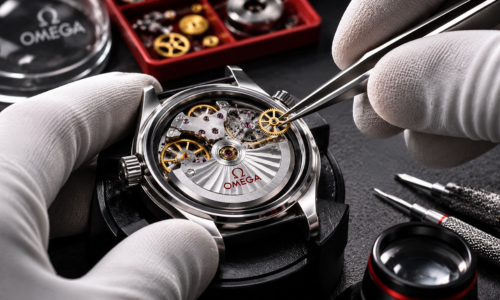
A proper mechanical service is more involved than opening the case and adding lubricant.
The aim is to examine the movement, address wear or faults, restore appropriate lubrication and verify performance.
Initial Diagnosis
The watchmaker begins by assessing the watch’s condition and reported symptoms.
For a mechanical Omega, this may include checking timekeeping, amplitude, beat error, winding behaviour and power reserve, where applicable.
The case, crystal, crown and pushers are also examined for damage or signs of compromised seals.
Movement Disassembly and Cleaning
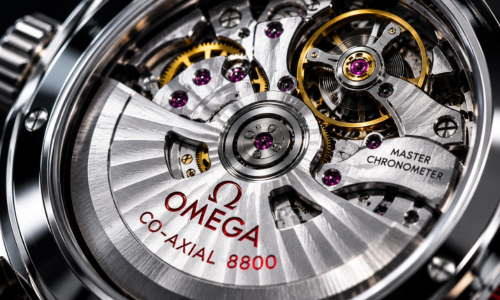
Where a full overhaul is required, the movement is carefully disassembled.
Components are inspected for wear, contamination and damage. Suitable parts are cleaned using professional watchmaking procedures, with delicate components handled according to the movement’s requirements.
Worn or damaged parts are identified before reassembly.
Lubrication and Reassembly
Mechanical watch movements contain numerous contact points that require carefully controlled lubrication.
Too little lubrication can increase wear. Excessive or incorrectly applied lubricant can also interfere with performance.
The watchmaker reassembles the movement using the appropriate lubricants and procedures for the calibre.
Regulation and Testing
After reassembly, the movement is checked and regulated as appropriate.
For automatic watches, the winding system and power reserve may also be assessed.
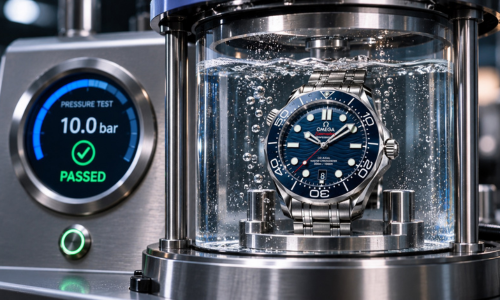
Case sealing and water-resistance testing can form part of the work where suitable for the watch’s design, condition and intended use.
A complete service should be judged by the work performed and testing carried out, not simply by how polished the case looks afterwards.
Omega Seamaster vs Speedmaster: Different Servicing Needs
Two of Omega’s best-known collections are the Seamaster and Speedmaster.
Both include sophisticated movements, but their designs and intended uses create different maintenance considerations.
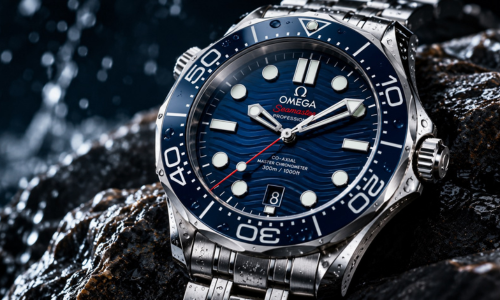
Omega Seamaster Servicing
The Seamaster family includes diving and sports watches, many designed with significant water-resistance capabilities.
For these watches, case integrity is especially important.
A service assessment may need to consider the crown, case-back gasket, crystal seals and water-resistance performance, alongside the movement itself.
A Seamaster that has been regularly exposed to water deserves particular attention to its sealing system.
Water resistance can deteriorate over time, even when the watch appears externally undamaged.
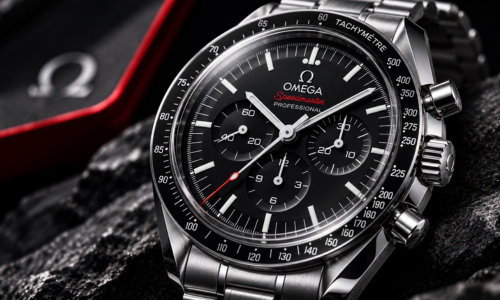
Omega Speedmaster Servicing
The Speedmaster collection is particularly associated with chronograph movements.
A chronograph adds mechanical complexity because its start, stop and reset functions involve additional components.
If the chronograph seconds hand fails to reset correctly, a pusher feels unusual or the timing mechanism behaves inconsistently, the watch should be assessed.
Not every Speedmaster uses the same calibre or movement architecture.
The precise service requirements depend on the reference, movement and condition.
Five Warning Signs Your Omega Needs Servicing
Omega watches are designed for reliable performance, but no mechanical movement is maintenance-free.
These five symptoms deserve attention.
1. Your Omega Is Gaining or Losing More Time Than Usual
A noticeable change in accuracy may indicate a movement issue.
Possible causes include changes in lubrication, wear, magnetism, impact damage or a need for regulation.
A small timing adjustment may be sufficient in some cases, while other watches require more extensive work.
The important point is to diagnose the cause rather than automatically recommending a complete overhaul.
2. The Power Reserve Has Become Noticeably Shorter
If your automatic or manual-winding Omega stops much sooner than expected, something may be affecting its stored energy or winding performance.
Potential causes include problems with the mainspring, automatic winding system or increased friction inside the movement.
Power-reserve specifications differ between Omega calibres, so compare your watch with the manufacturer’s specification for its exact movement.
3. The Crown Feels Stiff or Difficult to Wind
The crown should operate according to the watch’s design without excessive force.
Unusual resistance, grinding sensations or inconsistent winding may indicate a problem with the winding mechanism, stem or crown assembly.
Do not force the crown.
Continued operation could worsen an existing fault.
4. The Chronograph Is Not Working Correctly
For Speedmaster and other Omega chronograph owners, warning signs may include a hand that fails to reset, inconsistent starting or stopping, or pushers that do not operate normally.
These symptoms require proper inspection.
A chronograph fault is not necessarily evidence that the entire watch needs replacing or that every component requires servicing.
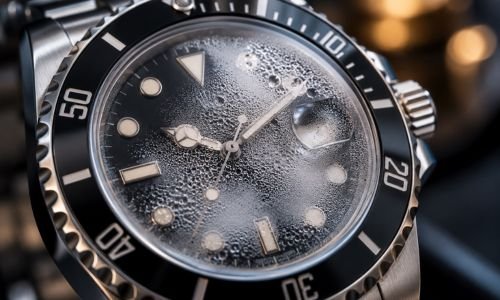
5. Condensation Appears Beneath the Crystal
Moisture inside an Omega should be treated seriously.
Condensation can indicate that water has entered the case, potentially affecting the movement, dial and hands.
Do not attempt to dry the watch with a hairdryer or place it in rice.
Keep it away from further water exposure and arrange a professional assessment promptly.
Our guide to Water Damaged Watch Repair London explains the warning signs and immediate precautions in more detail.
How Often Should You Service an Omega Watch?
Omega’s published guidance generally recommends servicing every five to eight years, depending on the model, climate and how the watch is used.
That is guidance rather than a fixed deadline for every watch.
An Omega worn daily in demanding conditions may require attention sooner than one used occasionally and stored carefully.
A watch showing unusual behaviour should be assessed regardless of when it was last serviced.
The opposite is also true: age alone does not establish precisely which repair procedures are necessary.
Does a Co-Axial Movement Need Servicing?
Yes.
Omega’s Co-Axial escapement was developed to improve aspects of mechanical performance and reduce sliding friction at the escapement.
However, a Co-Axial watch still contains a mainspring, gear train, bearings, automatic winding components where fitted, and other parts requiring appropriate maintenance.
The escapement design does not make the entire movement immune to wear, contamination or ageing lubricants.
The appropriate service interval remains dependent on the specific watch and its operating conditions.
Independent Omega Watchmaker vs Authorised Omega Service Centre
Omega owners can choose between the manufacturer’s authorised servicing network and an independent watch repair specialist.
The right choice depends on the watch, the work required and the owner’s priorities.
| Consideration | Independent watchmaker | Authorised Omega service |
|---|---|---|
| Initial assessment | Direct workshop assessment may be available | Manufacturer-network assessment |
| Service quotation | Based on individual watch and required work | Based on manufacturer procedures and assessment |
| Parts | Availability depends on supplier access and calibre | Manufacturer-authorised parts network |
| Warranty | Workshop’s own repair guarantee | Applicable official service warranty |
| Vintage watches | May offer preservation-focused options | Subject to manufacturer policies and parts availability |
| Turnaround | Depends on workload, complexity and parts | Depends on service centre, work and parts |
Omega recommends its authorised service centres or boutiques for maintenance, as they operate within the manufacturer’s servicing standards.
An independent specialist can still be a practical option for owners who want an assessment or repair outside that network.
However, independent servicing is not the same as manufacturer-authorised servicing.
If your Omega remains under its original manufacturer warranty, or if official service documentation is particularly important to you, consider the authorised route before approving independent work.
For an older or collectible Omega, ask how replacement parts, dial restoration and polishing will be handled.
How Long Does Omega Watch Servicing Take?
There is no universal turnaround time.
A straightforward assessment or minor repair may be completed relatively quickly, while a full movement overhaul requires considerably more work.
A complicated chronograph, vintage calibre or watch needing replacement components may take longer.
At Dynamis, basic repairs can often be completed quickly, but a complete Omega service should not be confused with a while-you-wait battery replacement.
We recommend bringing the watch for assessment so the likely work and turnaround can be discussed.
If parts must be sourced, the estimate may need to be revised.
Should You Polish Your Omega During Servicing?
Polishing is not automatically necessary during a mechanical service.
It is a separate decision involving the watch’s appearance, condition and originality.
A light professional refinishing may improve the appearance of certain modern watches, but aggressive polishing can alter case geometry and soften the edges of lugs, bezels or bracelet links.
For vintage or collectible Omegas, original finishing and evidence of age may be important to long-term value.
A watch with a well-preserved original case should not be polished simply because it is being serviced.
Ask your watchmaker to explain the proposed refinishing before authorising it.
Our guide to Watch Polishing London discusses when polishing may be appropriate and when leaving the original finish untouched is the better choice.
Is an Omega Watch Worth Repairing?
In many cases, repairing a well-made Omega is worthwhile.
However, the decision should consider more than the original purchase price.
The watch’s age, movement, condition, sentimental value, availability of components and cost of the proposed work all matter.
A vintage Omega inherited from a family member may be worth preserving even when the repair cost is relatively high.
For a watch with extensive water damage or a severely compromised movement, the cost and availability of replacement components may affect whether repair is economical.
A good assessment should distinguish essential work from optional cosmetic improvements.
You should understand the proposed repair before agreeing to proceed.
Choosing an Omega Watch Service in Central London
When selecting a workshop, ask whether the watchmaker has experience with your Omega model and calibre.
It is also worth asking what a complete service includes, whether the movement will be tested after repair, how water resistance will be assessed and what guarantee applies.
For watches with Co-Axial movements or chronograph complications, appropriate technical knowledge and parts access are particularly important.
At Dynamis Watch Service Piccadilly, we have been working with luxury and everyday watches since 1994.
Our workshop inside Piccadilly Circus Underground Station is convenient for customers travelling through Soho, Mayfair, St James’s, Regent Street and the wider Central London area.
We welcome walk-in assessments and explain the recommended work before substantial repairs proceed.
For a broader overview of mechanical servicing prices, see our Watch Servicing Cost London guide.
Frequently Asked Questions
How much does an Omega watch service cost in London?
Omega servicing costs depend on the model, movement and condition. Dynamis lists indicative starting prices of £150 for Omega quartz servicing, £200 for automatic servicing and £280 for Co-Axial movement servicing. These are not fixed quotations for every watch. Additional parts, corrosion or complicated movement work may increase the final price, which should be confirmed after inspection.
How often should an Omega Seamaster or Speedmaster be serviced?
Omega generally recommends servicing every five to eight years, depending on the model, climate and use. A Seamaster regularly exposed to water may need periodic seal checks, while a Speedmaster showing chronograph problems should be assessed promptly. Changes in accuracy, power reserve or winding behaviour may justify inspection before the usual service interval.
Can an independent watchmaker service an Omega Co-Axial movement?
An appropriately equipped and experienced independent watchmaker may be able to service certain Omega Co-Axial movements, subject to the calibre, required procedures and parts availability. This does not make the workshop an Omega-authorised service centre. Owners should ask about relevant experience, replacement parts, testing and the repair guarantee before proceeding.
How long does an Omega service take?
Turnaround depends on the calibre, condition, work required and availability of replacement components. Minor repairs may be quicker than a complete mechanical overhaul, particularly on chronographs or older watches. A reliable estimate should follow an assessment of the specific watch rather than a blanket promise of same-day servicing.
Can I bring my Omega to Dynamis without an appointment?
Yes. Dynamis Watch Service Piccadilly welcomes walk-in customers Monday to Friday, 10am–6pm. Our workshop is located at Unit 9 inside Piccadilly Circus Underground Station, London W1J 9HS. Bring your Omega and any relevant service history so we can assess its condition and discuss the available repair options.
Visit Dynamis Watch Service Piccadilly
If your Omega Seamaster, Speedmaster or another Omega model is showing signs of wear, unusual timekeeping or a movement fault, visit our workshop for an assessment.
We have been servicing watches in Central London since 1994 and work with mechanical, automatic, quartz, luxury and vintage timepieces.
Dynamis Watch Service Piccadilly
Unit 9, Piccadilly Circus Underground Station
London W1J 9HS
Telephone: 020 3808 0124
Opening hours: Monday–Friday, 10am–6pm
Walk-ins: Welcome
Guarantee: 12 months on our completed work
Our related guides:
Bring your Omega to our Piccadilly Circus workshop, and we’ll discuss the appropriate next steps before any substantial repair work is undertaken.